助動詞は動詞の前に置いて「〜できる」「〜しなければならない」などの意味を足す語です。助動詞のあとの動詞はいつも原形で、主語が he・she でも助動詞に -s は付きません(○ He can swim. × He cans swim. × He can swims.)。
助動詞
意味
書きかえ・例文
can
〜できる(能力)/〜してもよい(許可)
= be able to。I can play the piano.
will
〜するだろう(未来)/〜するつもりだ(意志)
= be going to(前から決めている予定)。It will be sunny tomorrow.
must
〜しなければならない(義務)/〜にちがいない(推量)
= have to(主語が3人称単数なら has to)。You must finish your homework.
may
〜してもよい(許可)/〜かもしれない(推量)
May I use this pen?
should
〜すべきだ・〜したほうがよい(助言)
You should go to bed early.
could
can の過去形(〜できた)/ていねいな依頼
= was / were able to。Could you help me?
would
will の過去形/ていねいな依頼・申し出
Would you like some tea?
shall
(疑問文で)〜しましょうか
Shall I open the window? / Shall we dance?
否定文と疑問文の作り方
否定文は助動詞のうしろに not(cannot / can’t、will not / won’t、must not / mustn’t、should not / shouldn’t)。疑問文は助動詞を主語の前に出す(Can you swim? — Yes, I can. / No, I can’t.)。do や does は使いません。
まちがえやすい:must not と don’t have to
形
意味
例文
must not
〜してはいけない(禁止)
You must not run in the hallway.
don’t have to
〜しなくてもよい(必要がない)
You don’t have to come tomorrow.
must には過去形が無いので、「〜しなければならなかった」は had to、未来は will have to で表します。
会話でよく使う決まった言い方
言い方
意味
答え方の例
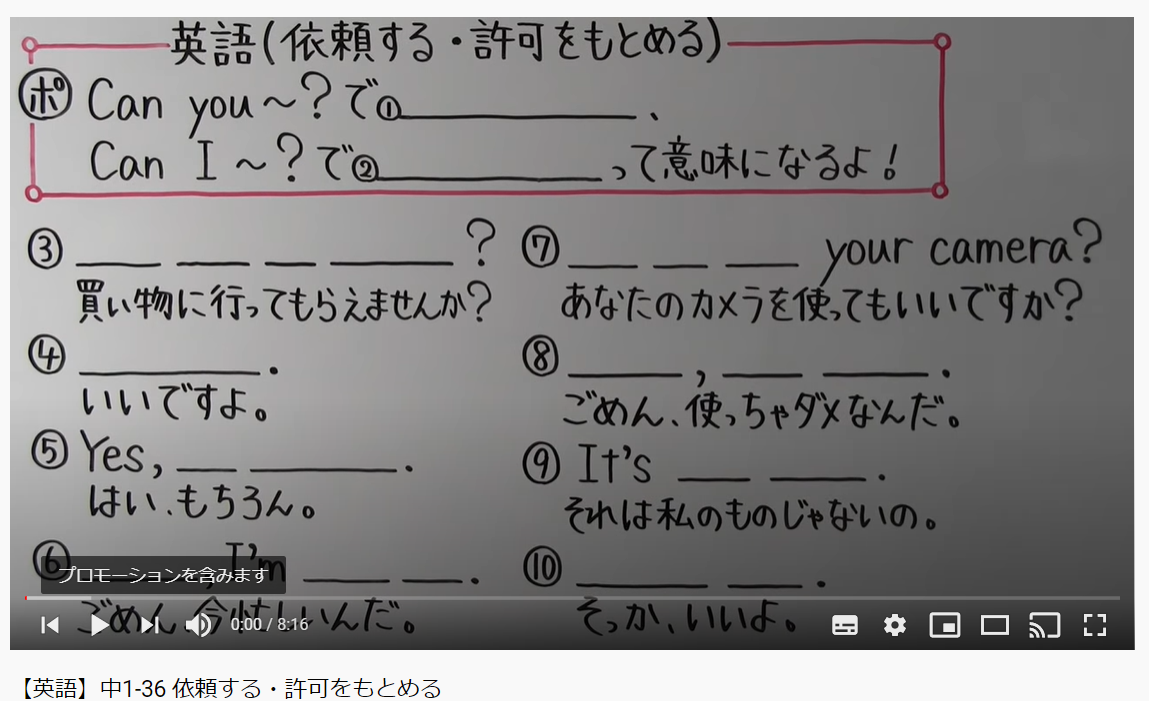
Can I 〜? / May I 〜?
〜してもいいですか(May のほうがていねい)
Sure. / Of course. / Sorry, you can’t.
Can you 〜? / Will you 〜?
〜してくれますか(依頼)
All right. / OK. / Sorry, I can’t.
Could you 〜? / Would you 〜?
〜していただけますか(ていねいな依頼)
Sure. / I’m sorry, but I can’t.
Shall I 〜?
(私が)〜しましょうか(申し出)
Yes, please. / No, thank you.
Shall we 〜?
(いっしょに)〜しましょうか(さそい)
Yes, let’s. / No, let’s not.
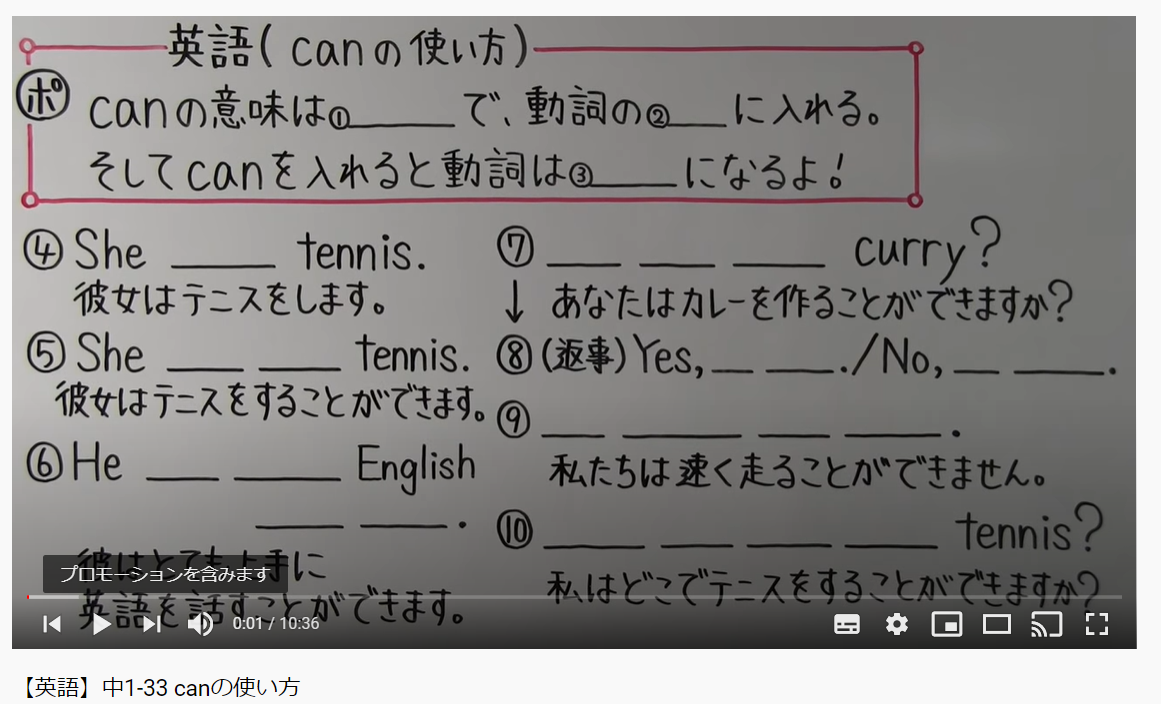
下の動画では「canの使い方」から助動詞を1つずつ確かめられます。中1で can、中2で will・must・may・should と have to・be able to の書きかえを習います。